Springtime can be an uncertain time of year for parents of children with allergies; allergy symptoms can overlap significantly with cold symptoms, especially in children. Cold and flu season is beginning to ebb away, but they haven’t gone yet. Here’s how to tell the difference between allergies and a cold.
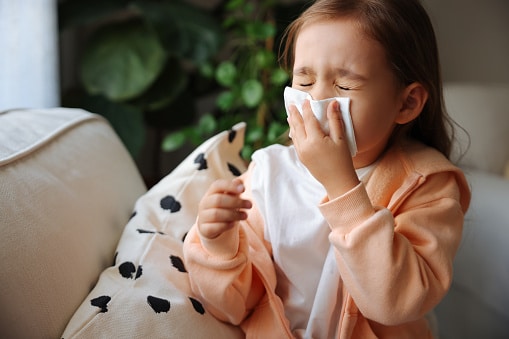
Why Allergies and Colds Are More Uncomfortable for Kids
When kids get sick or have an allergic reaction, the same things happen in their bodies as in an adult’s: the immune system deploys to remove or destroy the threat, whether that threat is a virus (as in a cold) or a harmless substance (as in allergies). The familiar symptoms of colds and allergies—sneezing, runny nose, congestion, etc.—are all instruments of the immune system.
However, you may notice that kids seem more affected by colds and allergies, or that their symptoms are more intense than an adult’s. The main reason for this is that the passageways in children’s faces are smaller, so they’re easier to block.
The Paranasal Sinuses
The paranasal sinuses are a system of air-filled chambers and passageways behind the nose and face. These are responsible for producing mucus, which keeps the inside of your nose hydrated, traps debris and flushes out germs. When the passageways through which mucus drains get blocked, it can lead to mucus buildup and a sinus infection.
In children, it’s much easier to clog these passageways. When mucus production increases to fight an invader, it can accumulate very quickly, and inflammation from allergies or a cold can swell the passageways shut. This is why children get sinus infections so much more frequently than adults do, especially during cold season and allergy season.
The Eustachian Tubes
The Eustachian tubes are another critical passageway in the head. They connect the middle ear to the back of the throat. Their function is to equalize pressure between the inside of your head and the outside and to drain fluid from the ear. When these tubes are obstructed, it can lead to an ear infection.
Just like with the paranasal sinuses, children’s Eustachian tubes can clog much more easily than an adult’s. In both colds and allergies, the immune system triggers inflammation to trap the foreign invader, and that inflammation blocks the Eustachian tubes. This is why 5 out of 6 children experience an ear infection by their third birthday, making it the most common health condition among children, after the common cold.
How to Tell If It’s Allergies: Itchiness
The deciding factor on whether your child’s symptoms are allergy- or cold-related is itchiness. The immune response in allergies is characterized by the release of histamines, a chemical that controls inflammation. This chemical only deploys to one area, rather than the whole body. Because of this, you’ll experience itchy symptoms and in only one area, such as the nose, eyes or skin where contact with the allergen was made. Look for:
- Itchy nose
- Sneezing
- Itchy eyes
- Watery eyes
- Hives or rashes
- Wheezing or asthma
How to Tell If It’s a Cold: Whole-Body Reaction
Since a virus will multiply and spread, the immune system must respond in kind. This means that symptoms associated with a cold are felt throughout the body and emphasize destruction of the threat, rather than simple removal. Look for:
- Fever
- Body aches
- Headache
- Fatigue
- Thick, cloudy or green nasal discharge
When to Seek Help
Pediatric allergies are tough because they will continue to develop over the course of your child’s life and will slow your kid down every year. If you’re interested in seeking professional help with your child’s allergies, contact ENT & Allergy Specialists – Ear Nose and Throat Physicians and Surgeons. We can perform an allergy test and develop a custom treatment plan for your child’s allergies.