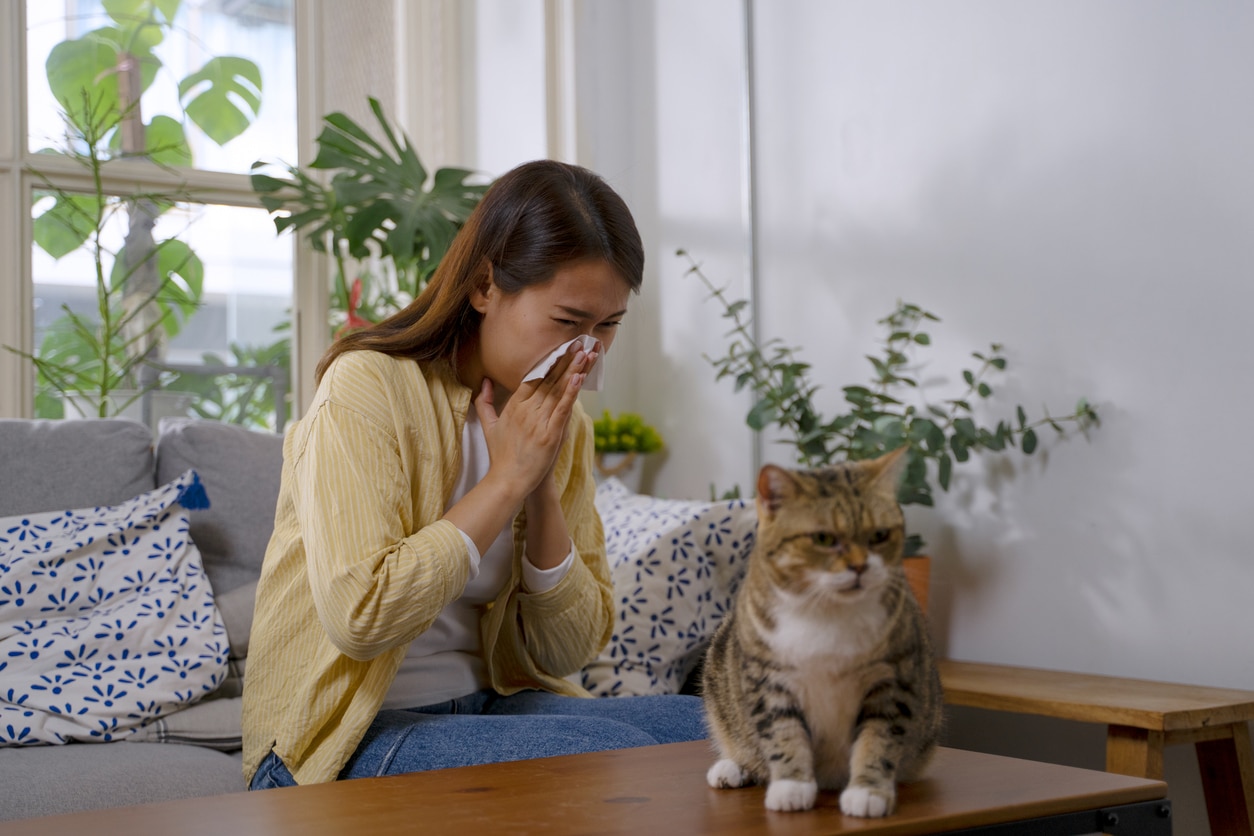
We know our patients love their pets, even our patients with pet allergies. One survey found that almost two-thirds of Americans own a pet, and nearly all—97%—of pet owners consider their pets family members.1 If your furry family member is causing you to sneeze a lot, especially lately, we’ve got a guide here on how to manage it so you can enjoy those couch snuggle sessions sniffle-free.
Pet Allergies Explained
As with any allergy, pet allergy symptoms result from the immune system overreacting to substances that are generally harmless. These symptoms include sneezing, itchy eyes and nose, runny nose, hives or rashes, watery eyes and coughing.
The substance that triggers that immune system response is typically pet dander, a flaky, light substance that’s primarily made of dead skin cells. However, in rarer cases, proteins in animal saliva or urine could trigger symptoms.
The most common animals that cause allergies are the most common pets: dogs and cats. This makes sense if you think about it; we spend more time with dogs and cats, so allergy symptoms tend to be more prominent. But almost any type of pet can trigger pet allergies: rabbits, hamsters, horses, even birds.
Why Pet Allergies Are Worse in the Colder Months
If you’re allergic to animals, then you’re allergic year-round, but many animal allergy sufferers notice that in the fall and winter, their symptoms get worse. This is mostly due to increased exposure. We tend to spend more time at home this time of year. Plus, blankets and upholstery tend to capture a lot of pet dander; if you’re spending a lot of time wrapped up on the couch, you’re probably enveloped in dander.
Moreover, if your pet spends a lot of time outdoors, you might keep them inside more often to keep them warm, too. More time spent in enclosed spaces means more exposure to their dander, and more of their dander is falling off inside the house rather than outside it.
And finally, fall is shedding season for furry animals. Animals shed their light summer coat and grow in their thick winter coat at this time of year, and dander will fall off with all those hair clumps.
How to Manage Pets and Pet Allergies
There are a few tactics you can use to keep ahead of pet dander and minimize your allergic reactions. The first is to manage your exposure. Of course, you can’t avoid your pet altogether (nor would you want to), so here are some actions you can take.
- Always wash your hands after touching your pet, and avoid touching your face (especially your eyes) until you wash your hands.
- Brush and bathe your pet to remove excess dander from their body. (If possible, ask a family member without allergies to do this.) Dry the animal thoroughly.
- Vacuum thoroughly and often. We especially recommend a HEPA vacuum cleaner, which will remove more of the tiny particles.
- Wash all bedding and blankets in hot water.
Your next line of defense is medications. Over-the-counter antihistamines (Claritin, Zyrtec) will lessen the immune system’s reaction and reduce symptoms. For quick relief, you can rinse dander out of your system using nasal rinses or eye drops.
Finally, there’s allergy immunotherapy, which treats the root cause of the allergies: your immune system. Think of your immune system as an overprotective guard dog (apt metaphor, right?): it treats pet dander like a stranger that it thinks is a threat and acts aggressively toward it. Immunotherapy is like teaching the guard dog that this stranger is safe by introducing the stranger in controlled settings at a regular schedule.
Our allergy team can get you started with immunotherapy so your pet won’t trigger your allergic reactions anymore. Call us today to learn more!
Learn More
Sources
1 About half of U.S. pet owners say their pets are as much a part of their family as a human member. (2023, July 7). Pew Research Center. https://www.pewresearch.org/short-reads/2023/07/07/about-half-us-of-pet-owners-say-their-pets-are-as-much-a-part-of-their-family-as-a-human-member/